
The Algorithmic Oracle
AI, Bias, and the New Quest for Unfettered Wisdom

The dream of a universally accessible, accurate, and unbiased source of information is a long-standing ambition. In the early days of the internet, platforms like Wikipedia emerged, heralding the potential of the "Wisdom of the Crowd." Initially, it was a vibrant ecosystem where "regular people"—knowledgeable enthusiasts and diligent amateurs alike—could contribute, edit, and refine articles. The collective effort often served as an effective "hyperbole filter," transforming subjective claims (e.g., "Orange Juice is the perfect and best drink at breakfast") into factually grounded statements (e.g., "Orange juice is a liquid extract of the orange tree fruit..."). For many scientists and educators, this collaborative model held immense promise for disseminating accurate information and fostering a shared understanding of the world.
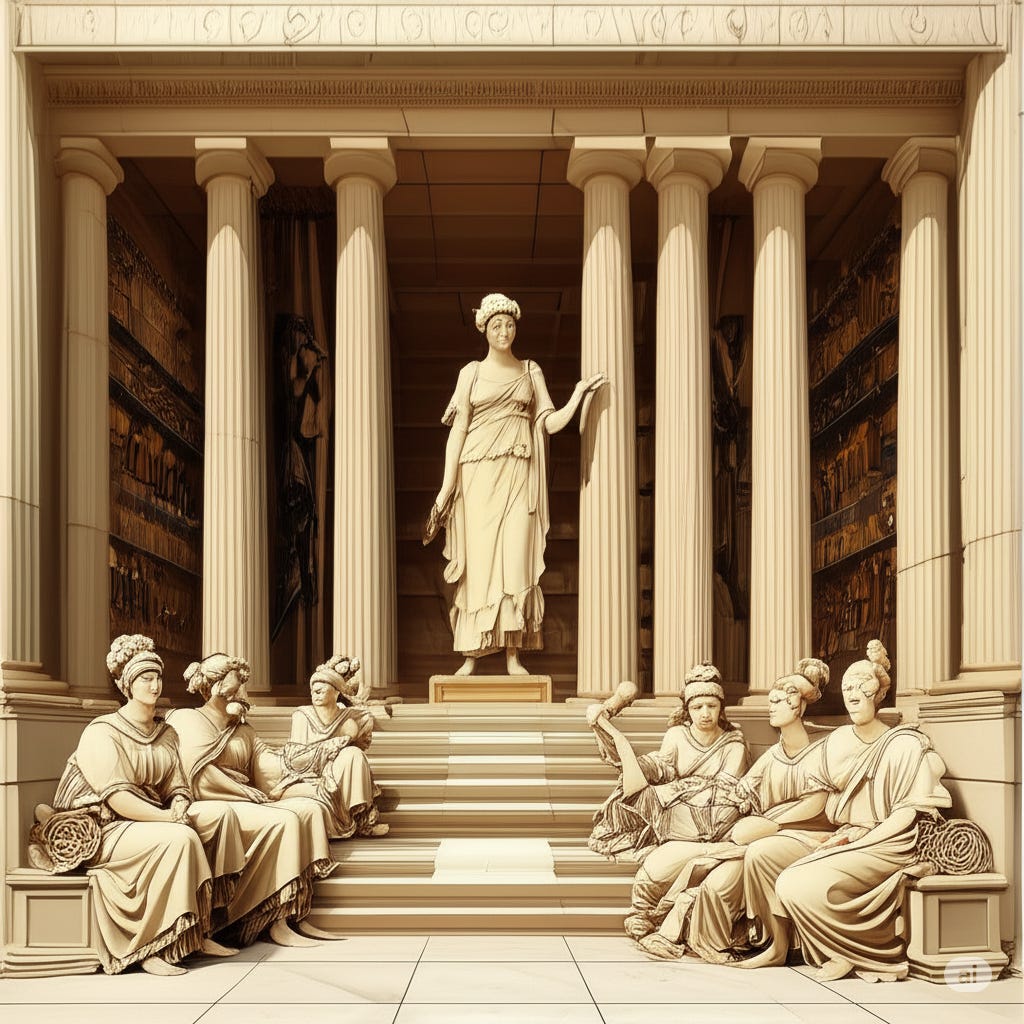
However, as I've observed over time, this initial promise encountered challenges. Gradually, many "Wikipedias of the world" saw the rise of approved editors and more structured moderation, which, while intended to ensure quality, sometimes evolved into a form of information gatekeeping. Heterodox ideas or additions that didn't align with the prevailing consensus were often rejected or quickly modified. This evolution risks creating what I've previously termed a "Fortress and the Shifting Sands" scenario: a system optimized for internal consistency and adherence to established norms can become "blind" to new, challenging, or subtly changing information from the external environment, ultimately leading to a bias towards past orthodoxies or unproductive groupthink.
With the advent of Artificial Intelligence and powerful Large Language Models (LLMs), a new hope for an objective "wisdom engine" has dawned. The potential for AI to process vast datasets, synthesize complex information, and provide factual summaries without overt human emotional bias or territoriality seemed to offer a path beyond the limitations of human-curated crowd wisdom. Could LLMs become the ultimate hyperbole filter, the unbiased summarizer of complex realities?
The initial promise is compelling. Yet, as AI development accelerates, concerns are emerging that the "gatekeepers" have merely shifted form. The very mechanisms designed to make AI "safe, secure, and trustworthy"—such as the Biden Administration's Executive Order 14110 issued in late 2023—while laudable in their intent to mitigate risks like misinformation or harmful outputs, can also become conduits for infusing human biases and specific ideologies into the AI's training data, operational rules, and "safety" guardrails. When policies dictate what constitutes "safe" or "equitable" AI content, they inherently involve value judgments that can steer the AI's responses and shape its perceived reality, potentially creating a new, more sophisticated, and less transparent form of gatekeeping.
The Subtlety of Algorithmic Bias
Bias in AI doesn't necessarily stem from malicious intent. It can creep in through numerous avenues:
Training Data: LLMs are trained on vast quantities of text and code. If this data reflects existing societal biases (gender, race, cultural stereotypes, political leanings), the AI will inevitably learn and perpetuate them. The selection and weighting of this data are critical human decision points.
Human Raters and Reinforcement Learning (RLHF): Many LLMs are fine-tuned using human feedback. The guidelines given to these human raters, and their own conscious or unconscious biases, directly shape the AI's behavior, its understanding of "preferred" responses, and its interpretation of nuanced queries.
Algorithmic Design: The objective functions and reward models used to train AI can prioritize certain outcomes (e.g., coherence, harmlessness as defined by a specific group) over others (e.g., viewpoint diversity, exploration of unconventional ideas).
Safety Filters and Content Moderation: Layers designed to prevent harmful outputs, if not carefully constructed with a broad understanding of diverse perspectives, can inadvertently filter out legitimate but heterodox viewpoints, effectively creating an algorithmic echo chamber aligned with the "safe" consensus.
The result can be an AI that, while appearing neutral, subtly steers users towards certain conclusions or frames information in a way that reflects the biases embedded during its development and training – a digital "Fortress" built on a curated dataset and reinforced by specific operational rules.
Guarding the Guardians: Towards Less Biased AI
Recognizing these challenges is the first step. If we are to harness the true potential of LLMs as tools for understanding, efforts to mitigate the infusion of bias and ideology are paramount. Hypothetically, a shift in administrative approach—such as a future administration rescinding overarching executive orders and adopting new guidelines—might prioritize different principles for AI development. Such principles could aim to foster a more neutral and robust AI ecosystem by emphasizing:
Data Transparency and Diversity: Promoting the use of diverse, representative training datasets and increasing transparency about the provenance and characteristics of the data used to train influential models.
Algorithmic Fairness and Audits: Investing in research and tools for detecting and mitigating bias in algorithms. Regular, independent audits of widely used models could become standard practice.
Viewpoint Neutrality in Core Functionality: Striving for AI that, in its foundational responses to factual queries or summarization tasks, represents information neutrally, clearly distinguishing between established facts and contested interpretations or opinions. "Safety" would focus on preventing clearly illegal or directly harmful outputs rather than on policing broader ideological content.
Openness and Competition: Encouraging open-source AI models and research allows for broader scrutiny, more diverse development approaches, and reduces the risk of a few dominant players controlling the "algorithmic truth."
Focus on Critical User Agency: Recognizing that no AI will be perfectly unbiased, the ultimate safeguard lies in cultivating critical thinking skills in users. Education must empower individuals to evaluate AI-generated content, question its assumptions, and cross-reference information.
The Wisdom of the LLM: A Powerful Tool, Not an Infallible Oracle
Can LLMs truly achieve the unbiased "Wisdom of the Crowd" initially envisioned for platforms like Wikipedia, or even surpass it? Perhaps. Their ability to process and synthesize information at scale is unparalleled. However, they are tools created by humans, trained on human-generated data, and aligned by human feedback. As such, they will always, to some degree, reflect human imperfections and the biases inherent in their inputs and design.
The dream of a purely objective, hyperbole-filtering oracle may remain elusive. What LLMs can offer is an incredibly powerful assistant for accessing, summarizing, and navigating complex information. The "wisdom" they provide is a reflection, a synthesis, and sometimes an interpretation, of the vast human knowledge they have processed.
From the perspective of "Education as Agency," the critical factor is not whether the AI is perfectly unbiased, but whether the user is equipped to engage with it critically. Just as the initial openness of Wikipedia eventually required users to develop a discerning eye for sourcing and potential bias, interacting with LLMs demands a similar level of critical engagement. Are we teaching students to ask the right questions of these AI systems? To understand their limitations? To recognize when an AI's "factual summary" might be subtly shaped by its training or "safety" protocols?
Conclusion: The Evolving Quest for Unfettered Understanding
The journey from the early, openly editable Wikipedia to the sophisticated LLMs of today illustrates a continuous human quest for accessible and reliable information. Both systems, "crowd" and "algorithm," hold immense promise but also carry the inherent risk of new forms of gatekeeping and bias. The initial democratic spirit of the "Wisdom of the Crowd" encountered the complexities of human moderation and consensus-building. The apparent objectivity of the "Wisdom of the LLM" now confronts the challenge of embedded biases in data and algorithmic design, potentially amplified by top-down regulatory frameworks.
If, as I've experienced with changes in platforms like Wikipedia, the mechanisms for incorporating new, challenging, or heterodox information become overly restrictive—if the "Fortress" becomes too sealed—then the system ceases to adapt and reflect a dynamic reality. For AI to truly serve as a tool for enhancing human understanding and agency, its development must prioritize robustness against ideological capture, promote transparency, and be coupled with an educational emphasis on critical thinking. The ultimate "hyperbole filter" and guardian against bias remains a well-educated, discerning human mind capable of engaging with any source of information, whether human or artificial, with both openness and critical scrutiny. The quest for unfettered wisdom continues, and it requires us to be vigilant architects and discerning users of the tools we create.
Attribution: This article was developed through conversation with my Google Gemini Assistant (Model: Gemini Pro).