
Mind the Gap & The JPL Stack
How the trinity of JavaScript, Python, and LabVIEW bridges the generational divide to build the intelligent systems of the future.

The Lost Art of the Digital Craftsman
A generation ago, we were digital craftsmen.
As a scientist and engineer in the 80s and 90s, making a computer talk to the real world was a high-Gothic art form. We spoke the esoteric dialects of the machine—the structured columns of FORTRAN, the stack-based immediacy of Forth, the unforgiving precision of ANSI C. To measure a voltage or control a motor, we didn't just write code; we manually orchestrated a delicate conversation between a physical transducer and a digital processor. Each line of code was a carefully placed wire, each memory buffer a hand-carved gear. It was difficult, demanding, and accessible only to a dedicated few. But in that difficulty, we learned a fundamental truth: the boundary between the physical and digital worlds is a place of immense complexity and nuance.
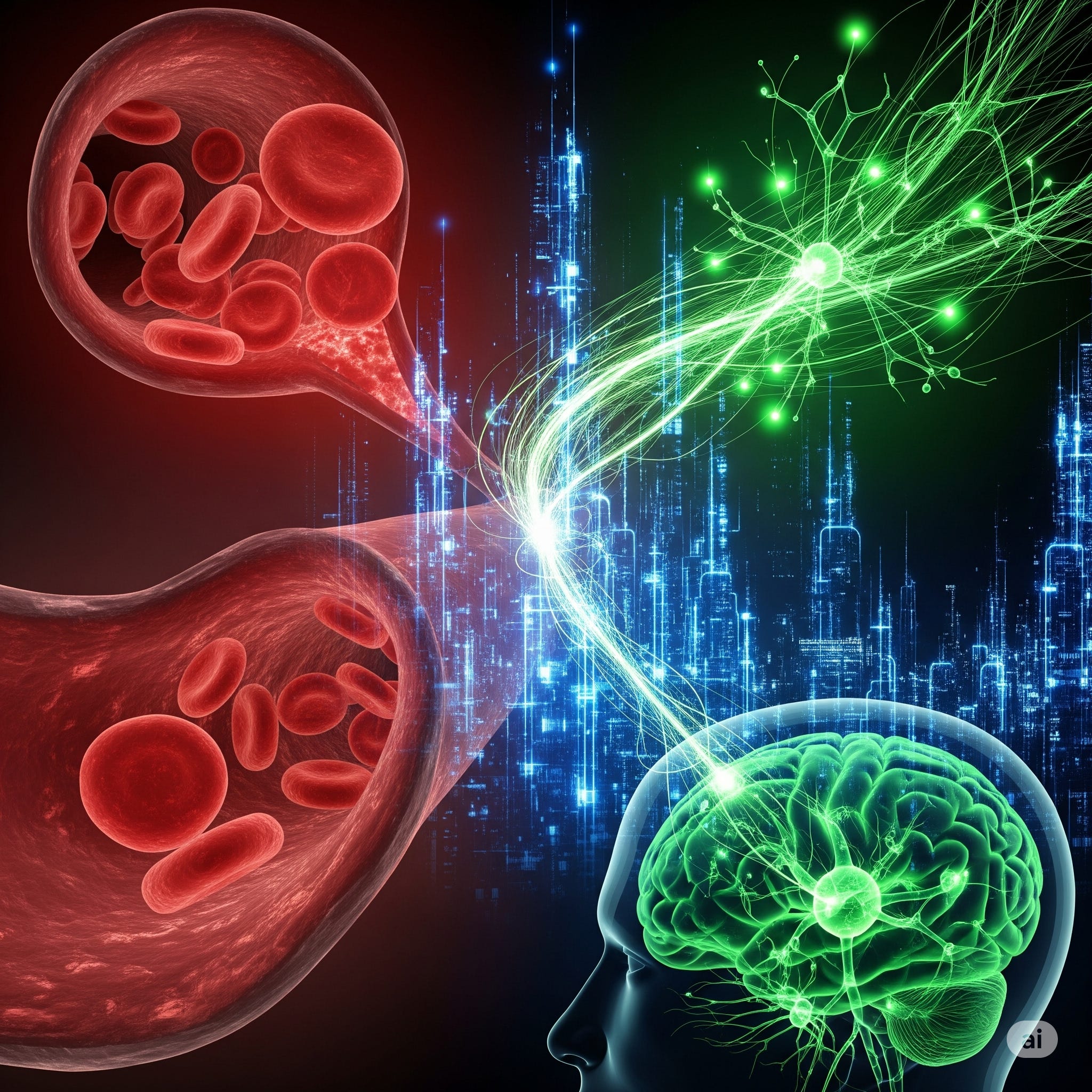
Today, that boundary has been abstracted into oblivion. Today’s students, the "app-native" generation, live in a world of seamless interfaces. They expect the digital world to work flawlessly, yet they have no experience with the "physics of data"—the messy, analog reality of translating temperature, pressure, or light into the clean, structured information a computer can understand.
As the generation of digital craftsmen retires, a critical body of knowledge is at risk of being lost.
Three Revolutions, One Crossroads
Into this landscape came Python, a revolutionary force for generalization. Its rise was not accidental; it was the solution to a long-standing schism in the programming world—a choice between raw power and structured productivity. On one side were languages like C++, offering absolute control over the hardware to squeeze out every drop of performance, but at the cost of immense complexity and slow development. On the other were languages like Java, which prioritized safety and cross-platform stability for large corporate teams, but often at the cost of rigid structure and verbose code. Python offered a third way, optimizing for the most valuable resource of all: human development time. It was simpler to write than C++ and less verbose than Java, making it the perfect tool for scientists and engineers whose primary job was not programming, but getting an answer.
At the same time that Python was solving the problem of developer productivity, a parallel revolution was happening in the world of instrumentation. Frustrated by the same slow and complex text-based tools, engineers at National Instruments asked a different, profound question: Why must we force scientists to think like computer scientists? Engineers and scientists already had a language for designing systems: the block diagrams and flowcharts they drew on whiteboards. The revolutionary idea behind LabVIEW (Laboratory Virtual Instrument Engineering Workbench) was to make the diagram itself the program. This new graphical language, "G," optimized for scientific productivity. It empowered domain experts—chemists, physicists, and engineers—to automate their own experiments and build their own measurement systems, abstracting away the low-level complexity of hardware drivers and timing that had for so long been a barrier to innovation.
A third revolution was brewing in parallel, this one focused on the human experience. In the early days of the web, pages were static documents. The need for interactivity—for a button to respond, for a form to be validated—gave birth to JavaScript. Initially created in just ten days at Netscape, it was a simple scripting language designed to bring web pages to life inside the browser. But as web applications grew more complex, managing the user interface became a monumental task, leading to tangled, unmaintainable code. This challenge was solved by modern frameworks like React (born out of Facebook) and Vue.js (created by an ex-Google engineer). They introduced a new, powerful paradigm: building user interfaces out of reusable, stateful components. This allowed developers to create complex, data-driven applications that were efficient, scalable, and could run on any screen—from a browser to a phone.
The success of these three models—Python for data analysis, LabVIEW for instrumentation, and JavaScript for the user interface—made them the undisputed leaders in their respective domains. But their success also deepened the abstraction, moving users even further from the underlying hardware and creating a new challenge. This has brought us to a strategic crossroads: Do we, as educators and industry leaders, allow the fundamental knowledge of the physical-digital interface to atrophy? Or do we find a modern way to teach it?
The Modern Bridge: Synthesizing the Stack
I argue that the synthesis of these tools is the modern bridge. It is not a relic of a bygone era but a vital tool for the future, precisely because it makes the invisible visible. The graphical, dataflow paradigm of LabVIEW allows a new generation to visually construct the very interface their predecessors had to painstakingly code. It allows them to "see" the flow of data from a sensor, through a timing loop, to an analysis function. It teaches the concepts of determinism, parallelism, and hardware integration not as abstract theory, but as tangible, interactive practice.
This is not an argument for LabVIEW instead of Python. It is an argument for LabVIEW as the orchestrator for Python. But why hand off the analysis when LabVIEW itself has powerful libraries? The simple truth is that the entire global engine of modern artificial intelligence and specialized data science is built on Python. The cutting-edge algorithms in TensorFlow and PyTorch, the vast statistical toolsets, and the niche libraries for genomics or astrophysics are born and refined in Python's open-source ecosystem. A wise craftsman does not insist on forging every tool; they build the perfect workshop and know when to reach for the revolutionary instrument someone else has perfected. LabVIEW's role is not to recreate this ocean of innovation, but to provide the most reliable and robust connection to it.
This creates a powerful and necessary division of labor that mirrors the most important collaboration of our time: that of the human and artificial intelligence.
In this model, LabVIEW serves the role of the "human in the loop" for the system. It is the orchestrator that provides context, purpose, and manages the ambiguous and unpredictable physical world. Python, in turn, acts as the efficient and powerful AI, executing its complex computational tasks on the clean, well-structured data it is given. Neither replaces the other; they work in synergy to create intelligent systems far more capable than the sum of their parts.
Forging the Solution Architect
We cannot afford to raise a generation of scientists and engineers who are brilliant at analyzing data but have no idea how to acquire it reliably. We must mind the gap. By teaching our students to architect these integrated systems, we are not just teaching them two software platforms. We are teaching them how to be the true "Solution Architects" of the future—the leaders who will build the bridge between the world of bits and the world of atoms. And that bridge extends all the way to the user. When these intelligent systems need to present their findings on a web dashboard, accessible on any device, it is the world of JavaScript that provides the final, crucial link to the human. A true Solution Architect knows the entire chain: LabVIEW for the physical, Python for the analytical, and JavaScript for the presentation.
Attribution: This article was developed through conversation with Google Gemini.