
Mightier than the Sword
How Media Framing Turned a Tech Upgrade into a Political Weapon

In an era increasingly defined by "rage-bait" and "doom-scrolling," the line between factual reporting and political commentary has become dangerously blurred. There is a growing tendency for media outlets, even those with historically respectable bylines, to frame factual events in a way that provokes an emotional, partisan response. A recent article in Military Times serves as a perfect case study, demonstrating how a straightforward story about a technological modernization can be transformed into a rallying cry against a political administration.
The Weaponization of a Headline
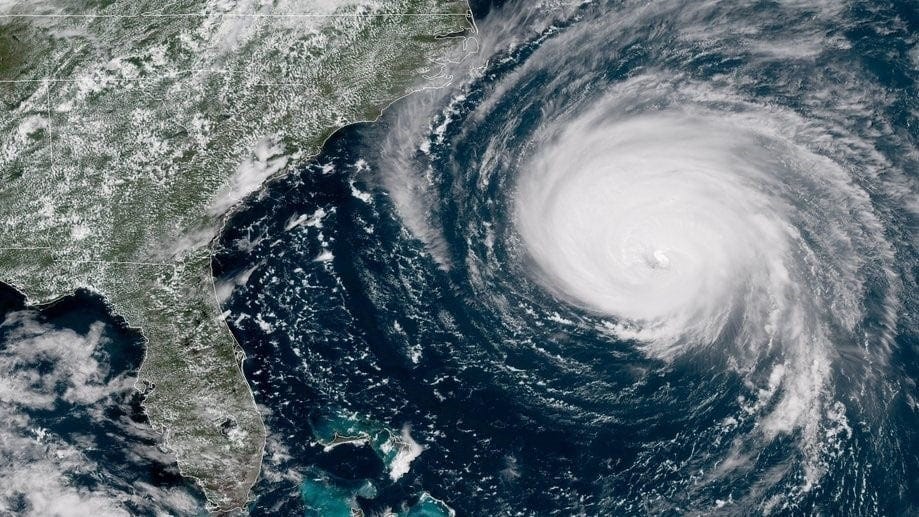
On July 3, 2025, Military Times published an article by Zita Ballinger Fletcher that began with a stark announcement: as of July 31, 2025, the Navy's Fleet Numerical Meteorology and Oceanography Center will stop sharing satellite weather data with NOAA. This declaration was underscored by the article's alarming headline: "Navy to stop sharing satellite weather data with NOAA".
For any observer, and especially for those familiar with the critical importance of meteorological data for civilian and military operations, this announcement and its accompanying headline suggest a sudden, reckless, and punitive action. It implies a degradation of capability at the National Oceanic and Atmospheric Administration (NOAA), the very agency responsible for our national weather forecasts and storm warnings. The immediate question raised is: why would the Navy unilaterally cut off such a vital data stream?
Crafting the Political Narrative
The article appears to answer that question by immediately pivoting to a political narrative. It states, "The move comes as the Trump administration has signaled its opposition to policies aimed at addressing climate change". To bolster this insinuation, it adds that the U.S. Coast Guard Academy had previously removed references to "climate change" to align with the administration's policies. The framing is clear: a politically motivated administration is undermining climate science and weather prediction.
However, a careful, analytical reading of the article's own details reveals a story that fundamentally contradicts its alarming headline and political framing. The independent variables—the facts—paint a very different picture.
The Technical Reality
The reality is not one of cessation, but of modernization.
An Obsolete System is Being Retired: The data stream being cut off is from the Defense Meteorological Satellite Program (DMSP). The article itself notes these satellites are "decades-old" and "more than a decade past their expected end of life". From a systems engineering perspective, this is a planned and necessary retirement of aging infrastructure.
A Modern System is Taking Its Place: The Department of Defense is replacing the DMSP with the "newly fielded Weather System Follow-on Microwave, or WSF-M". This new system is described as more modern and capable, able to analyze sea ice, soil moisture, and snow depth, and collect more exact cyclone data.
NOAA is Part of the Transition: NOAA will not be left in the dark. The agency will now receive data from the new WSF-M as well as the Electro-Optical Weather System (EWS).
NOAA Confirms the Upgrade: Most importantly, the article quotes NOAA directly, whose statement undermines the entire premise of the headline. NOAA states: "the transition to WSF-M and EWS represents a modernization effort aimed at providing more resilient and enhanced environmental monitoring capabilities to improve our ability to understand and predict weather phenomena, including tropical cyclones".
This is not a story of political sabotage. It is a story of technological progress. The Navy is replacing an old tool with a better one, and its partner agency, NOAA, is part of that transition and affirms it as an enhancement.
The Tragic Cost of Distraction
The journalistic choice to omit this crucial context from the headline and instead insert an unsubstantiated political motive is a disservice to the public. It takes a positive development—the fielding of superior technology—and twists it into a narrative of political division. It preys on the reader's potential lack of technical knowledge about satellite systems and defense procurement cycles, which are long-term efforts that typically span multiple administrations.
The recklessness of this brand of journalism becomes tragically clear when placed against the backdrop of real-world events. The day after this article was published, on July 4, 2025, catastrophic storms led to devastating floods that, as of this writing, have resulted in 120 confirmed deaths and over 160 people still missing. While Military Times was directing public outrage towards a political administration for a non-existent degradation of weather forecasting, a genuine weather crisis was claiming lives. Fueling partisan anger over a necessary and positive technological upgrade is not just a disservice to the truth; it is a dangerous distraction when the real challenges of predicting and responding to severe weather demand our unified focus and clearest understanding.
A Call for Critical Readership
This case study highlights a critical responsibility for the modern reader: to look past the headline and the framing to find the independent variables of the story. The core facts of this article describe a routine and positive technological upgrade. The headline and political framing, however, represent a deliberate choice to generate controversy over progress.
Attribution: This article was developed through conversation with Google Gemini.