
Choosing the Engine
Software Frameworks for Academic Research Tools

In the pursuit of scientific knowledge, particularly in experimental fields, the instruments we use are paramount. Often, cutting-edge research requires custom data acquisition (DAQ) systems tailored to specific needs – tools built, not bought. In an academic environment like my Sensors and Advanced Instrumentation Laboratory (SAIL) at UMES, building these tools involves not just the principal investigator but often undergraduate and graduate students. This introduces unique challenges and opportunities. The choice of software architecture – the underlying framework upon which these custom instruments are built – becomes a critical systems-level decision, impacting development time, maintainability, student learning, and ultimately, the success of the research itself.
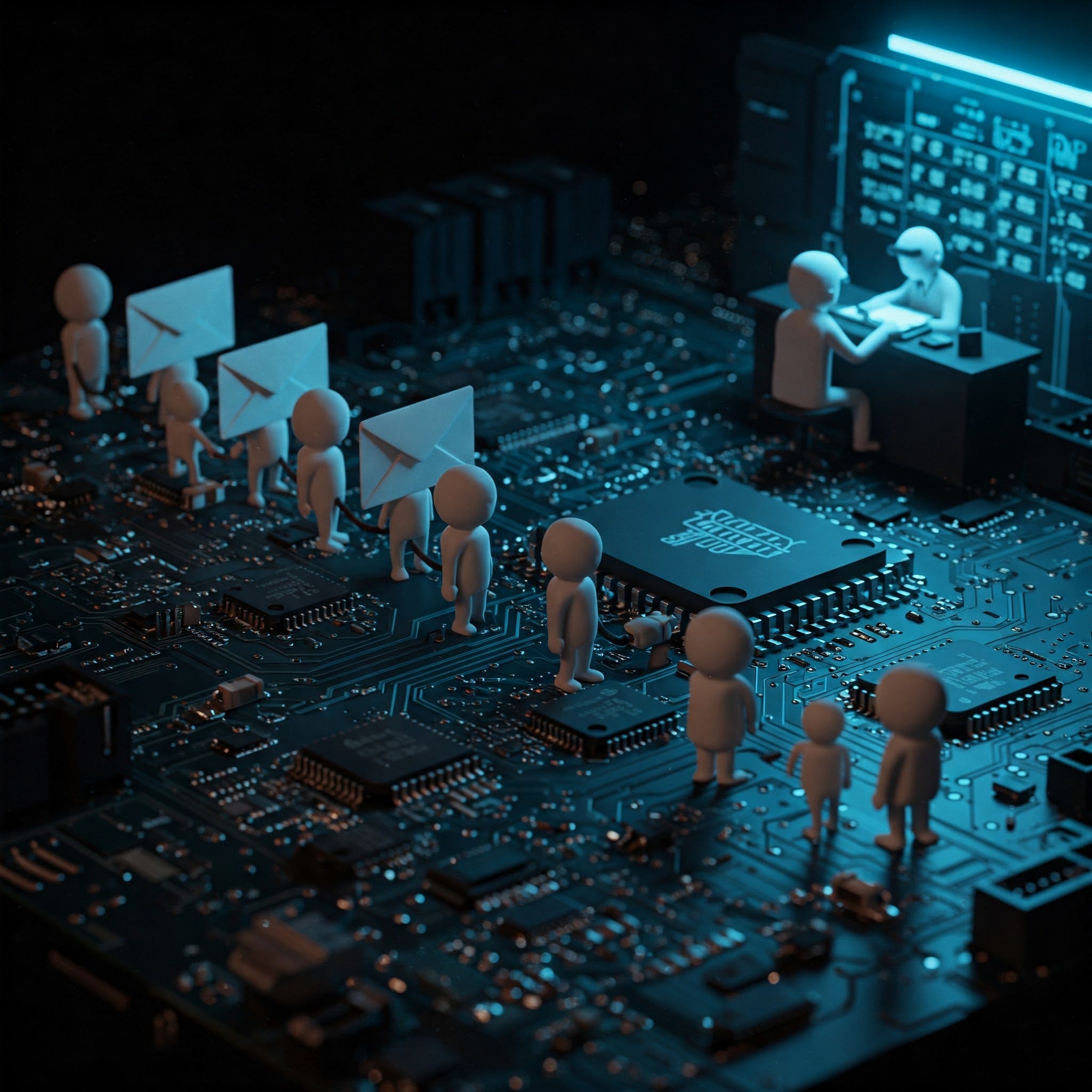
Recently, I undertook a comparative analysis of two prominent frameworks within the National Instruments LabVIEW ecosystem, a common platform in research labs: the Actor Framework (AF) and the Delacor Queued Message Handler (DQMH). Both aim to help manage the complexity inherent in systems that acquire data, control hardware, process information, and interact with users concurrently. While the technical details are specific to LabVIEW, the underlying principles and the decision-making process offer broader insights into selecting enabling technologies in a research and teaching context.
Two Philosophies for Managing Complexity
The Actor Framework (AF): Provided by National Instruments, AF is an implementation of the Actor Model, a powerful paradigm for concurrent computation. It relies heavily on LabVIEW Object-Oriented Programming (LVOOP). Each "actor" is an independent entity managing its own state and communicating asynchronously via messages.
Strengths: Highly scalable, excellent for managing complex parallel operations, leverages sophisticated OOP patterns (inheritance, polymorphism) for flexibility.
Weaknesses: Steep learning curve requiring deep LVOOP expertise, potentially slower initial development, debugging complexity can be high.
The Delacor Queued Message Handler (DQMH): Developed by community experts (and now stewarded by the DQMH Consortium), DQMH builds upon the familiar Queued Message Handler template but adds robust event-driven communication between modules and extensive productivity tools (scripting wizards, automated testers).
Strengths: Significantly gentler learning curve, promotes rapid development via tooling, enforces modularity and consistency, excellent built-in testing/debugging features, strong community support.
Weaknesses: Less enforcement of advanced OOP patterns compared to AF, potential for complexity in managing numerous events in very large systems (though tools exist to mitigate this).
The Academic Environment: A Unique System
Choosing between these frameworks isn't just a technical exercise; it's about selecting the right engine for the specific "vehicle" of an academic research lab. This environment has distinct characteristics:
Mixed Skill Levels: Development teams often include students (undergraduate and graduate) with varying programming experience, alongside potentially more experienced staff or faculty.
Learning Objectives: Part of the mission is educational. The tools and processes used should ideally contribute to student learning and skill development.
Project Timelines: Research often involves prototyping and iterating quickly on experimental setups.
Maintainability & Turnover: Students graduate, postdocs move on. Code needs to be understandable and maintainable by future team members.
Applying Systems Thinking to the Framework Choice
From a systems perspective, the "best" framework isn't just the most powerful in absolute terms, but the one that optimizes the entire system of research and education within the lab's constraints. The analysis highlighted several key trade-offs:
Power vs. Accessibility: AF offers immense OOP power but demands significant expertise. DQMH offers substantial capability with much greater accessibility for mixed-skill teams.
Development Speed vs. Architectural Sophistication: DQMH's tooling enables faster prototyping and development, crucial for many research timelines. AF's potentially more sophisticated OOP architecture might offer advantages for extreme long-term scalability but requires more upfront investment.
Support Model: AF relies on vendor (NI/Emerson) support, tied to corporate priorities. DQMH relies on a dedicated, specialized community and consortium, potentially offering more focused agility.
Recommendation for Academic Labs
The comparative analysis concluded with a clear recommendation: For the typical academic research lab environment supporting both research and teaching, the DQMH framework is generally the more appropriate choice.
Justification:
The reasoning hinges on DQMH's alignment with academic realities:
Student Integration: Its gentler learning curve (requiring solid LabVIEW basics rather than deep OOP expertise) makes it feasible to involve undergraduate and graduate students productively in developing sophisticated DAQ systems much sooner than with AF.
Productivity & Timeliness: The extensive scripting tools drastically reduce boilerplate code and accelerate development, fitting better with research project cycles and student project timelines.
Maintainability: The enforced modular structure and consistent coding style promoted by DQMH tools enhance long-term maintainability – critical when team members change.
Built-in Testing: The automatic API Tester simplifies unit testing and debugging, valuable for ensuring robustness and aiding student learning.
Teaching Value: DQMH serves as an excellent practical introduction to modular, message-based architectures, building on core LabVIEW skills.
While AF remains the powerhouse for highly complex systems built by LVOOP experts, DQMH provides a more pragmatic balance of capability, usability, and maintainability for the multifaceted demands of university research and education.
Enabling First Principles
Ultimately, the choice of a software framework in science is about enabling the application of first principles from Physics, Chemistry, and other domains. A framework that is too complex or difficult to manage effectively hinders the ability to build the tools needed to probe those principles. By providing a robust, accessible, and efficient development environment like DQMH, we empower researchers (including students) to spend less time fighting software complexity and more time focusing on the core scientific questions, designing experiments, acquiring meaningful data, and applying the fundamental principles of their disciplines to generate knowledge. Choosing the right engine allows the scientific journey to proceed more smoothly and effectively.
Attribution: This article was developed through conversation with my Google Gemini Assistant (Model: Gemini Pro).