
A Standard Model for Systems?
Integrating Energy, Material, Information, and Complexity

Science progresses not only through discovery but also through synthesis – the creation of frameworks that organize knowledge, reveal connections, and guide further inquiry. In fundamental physics, the Standard Model provides a remarkably successful, albeit incomplete, description of elementary particles and their interactions. While the sheer diversity of phenomena across all scientific disciplines may preclude a single, all-encompassing "Standard Model" in the same vein, the aspiration for unifying conceptual frameworks remains a powerful intellectual drive. This is particularly true for those of us whose work inherently crosses traditional disciplinary boundaries. For many years, I've developed and applied a personalized framework, deeply rooted in General Systems Theory (GST) and Systems Thinking, which serves as my own "Standard Systems Model." Its purpose is not to declare a final theory of everything, but to provide a coherent, integrated structure for informing my research actions and, crucially, for educating the next generation of scientists and thinkers.
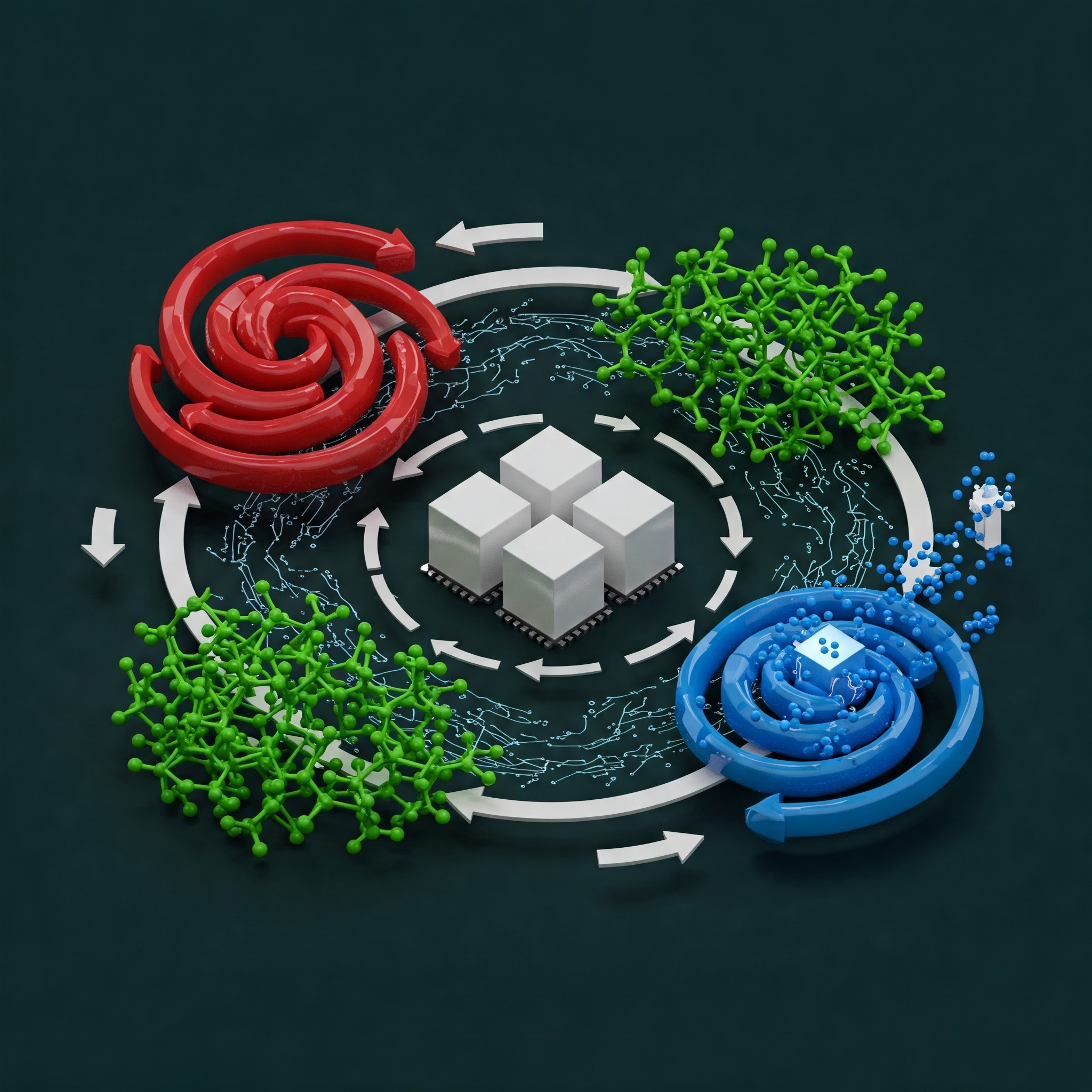
This model is not an island; it rests firmly on the foundations laid by pioneers who sought to understand the common principles governing systems, regardless of their specific nature. The insights of Ludwig von Bertalanffy, who championed the study of open systems and holism against narrow reductionism, are fundamental. Kenneth Boulding's Hierarchy of Complexity provides a crucial scaffold for understanding how systems increase in organization and emergent properties. Lars Skyttner's advocacy for GST as an interdisciplinary language highlights the practical need for such frameworks in a world of fragmented knowledge. And Jamshid Gharajedaghi's focus on sociocultural systems reminds us that understanding human endeavors requires incorporating the unique element of choice. My model attempts to synthesize these powerful ideas into a functional whole.
Laying the Foundation: Core Principles of GST and Systems Thinking
Before detailing my specific model, it's essential to appreciate the bedrock upon which it's built. General Systems Theory emerged in the mid-20th century as a reaction against the perceived limitations of purely mechanistic and reductionist approaches, which struggled to explain the unique characteristics of living organisms and complex organizations. Bertalanffy argued that we needed principles applicable to systems as systems.
Key tenets of GST that inform my model include:
Holism: The whole is more than, and often fundamentally different from, the sum of its parts. System properties emerge from the interactions between components. Understanding requires looking at the entire network of relationships.
Open Systems: Most systems of interest (biological, social, ecological, even many chemical processes) are open, meaning they exchange Energy, Material, and Information with their environment. This exchange is essential for their maintenance, adaptation, and evolution. Closed systems, which do not exchange with their environment, tend towards thermodynamic equilibrium and decay (entropy). Open systems can maintain complex states far from equilibrium.
Interconnectedness & Feedback: Systems are webs of relationships. Elements are interdependent, and changes ripple through the network. Feedback loops – where information about a system's state influences its subsequent behavior – are critical for regulation (negative feedback, maintaining stability) and change (positive feedback, driving growth or collapse).
Hierarchy: Complex systems are often organized in nested levels. Subsystems combine to form systems, which in turn are parts of larger suprasystems. Think of cells forming tissues, tissues forming organs, organs forming organisms, organisms forming ecosystems or societies. Boulding formalized this concept powerfully.
Isomorphism: GST seeks common principles, patterns, and mathematical structures (isomorphisms) that apply across different types of systems, regardless of the specific discipline studying them. Finding these isomorphisms allows for knowledge transfer and highlights underlying unity.
Systems Thinking translates these principles into a practical approach. It emphasizes seeing connections, understanding feedback, recognizing patterns over time, considering multiple perspectives, and surfacing the hidden mental models (assumptions, beliefs) that shape our understanding and actions. My "Standard Systems Model" is my attempt to make my own mental model explicit and coherent.
The Components of the Model: A Foundational Trinity and a Hierarchy of Complexity
My framework integrates two primary conceptual structures:
1. The Foundational Trinity (E/M/I - The RGB Analogy):
At the base of the model lie three components I consider fundamental to describing reality, visualized using the additive primary colors of light (Red, Green, Blue) as a heuristic analogy:
Energy (E) = Red: Representing the most fundamental aspect – the capacity for work, motion, change. This is the domain of Physics, dealing with forces, fields, thermodynamics, and the ultimate energetic underpinnings of existence.
Material (M) = Green: Representing matter in all its forms. Crucially, echoing Einstein's E=mc², Material is understood not as separate from Energy, but as emerging from specific, stable configurations of Energy. This is the domain of Chemistry, studying the properties and transformations of these energy configurations (atoms, molecules).
Information (I) = Blue: Representing order, pattern, structure, communication, computation, and meaning. Building upon the Energy-Material relationship, Information emerges from specific, non-random arrangements and interactions of Energy and Material. This encompasses the domains of Information Science, Mathematics, Logic, and Computer Science. It's the blueprint, the signal, the algorithm.
The RGB analogy helps visualize how these three distinct, fundamental aspects combine to generate the vast spectrum of complexity we observe. Just as mixing red, green, and blue light creates white light and all other colors, the interplay and integration of Energy, Material, and Information, in increasingly organized ways (E → M → I), forms the basis of all observable systems. This progression isn't merely metaphorical; the formation of Material from Energy is a literal physical principle, and the emergence of Information from specific Energy/Material arrangements represents the next verifiable level of systemic integration and complexity. This foundational trinity aligns with Bertalanffy's open systems, which depend on the flow and transformation of E, M, and I, and with the core GST concept of emergence – Material properties emerging from Energy, and Information emerging from structured Energy/Material.
2. The Hierarchy of Complexity:
Building upon the E/M/I foundation, the model organizes systems and the disciplines that study them into a three-tiered hierarchy of increasing complexity and emergent properties:
Tier 1: Foundational Sciences (Physics, Chemistry, Information Science): This tier deals with the fundamental rules governing the interactions of Energy (forces, thermodynamics), Material (atomic structure, chemical bonding, reactions), and Information (logic, algorithms, data). Systems at this level are often characterized by predictable behavior governed by relatively simple laws, corresponding roughly to Boulding's initial hierarchy levels: Frameworks (static structures like crystal lattices), Clockworks (simple dynamic systems like planetary orbits or basic machines), and Control Mechanisms (cybernetic systems with simple feedback, like thermostats).
Tier 2: Life Sciences (Cell, Organ, Organism): This tier marks the emergence of life, characterized by open systems exhibiting self-maintenance (autopoiesis), metabolism (energy/material throughput), complex feedback for homeostasis, adaptation, reproduction guided by genetic Information, and increasing levels of organization from cell to multicellular organism. This aligns with Boulding's levels of the Cell, the Plant (genetic blueprint, differentiation), and the Animal (mobility, sensory input, learning, centralized nervous system). New principles of biological organization and information processing become dominant.
Tier 3: Social Sciences & Humanities (Humans, Society, Philosophy): This tier is defined by the emergence of human self-consciousness, symbolic language, abstract thought, complex social structures, culture, shared values, ethics, and purpose. This corresponds to Boulding's highest levels: the Human (self-awareness, rich symbolic communication, understanding of time), Social Organization (roles, cultural transmission, institutions, political systems), and Transcendental Systems (dealing with ultimates, meaning, and the limits of knowledge – the realm of philosophy and deep reflection). The critical differentiator here, as emphasized by Gharajedaghi, is choice. Human systems are not merely complex biological or information-processing systems; they are driven by conscious intent, values, and the capacity for deliberate design and action.
This hierarchical structure provides a map for understanding how complexity builds and how different scientific domains address phenomena characterized by different dominant principles and emergent properties.
Applying the Model: A Framework for Academic Research and Education
The real test of any model is its utility. For me, the "Standard Systems Model" serves as a practical framework within the academic environment, guiding both research and, perhaps more importantly, student development.
Structuring Research Inquiry: The model provides a consistent lens for analyzing research problems. Identifying where a phenomenon sits within the hierarchy (Tier 1, 2, or 3?) and understanding its dominant E/M/I characteristics helps pinpoint the most relevant systems principles. For example, analyzing sensor behavior (Tier 1) might focus on energy transduction and feedback control, while studying student learning with a new technology (Tier 3) requires considering information processing, feedback, and human choice/motivation. It encourages looking for isomorphisms – are there control principles from Tier 1 cybernetics that offer insights into Tier 3 social dynamics, albeit with necessary modifications? It also promotes holistic design, reminding us to consider the Environment of the measurement, the full E/M/I flow, and potential higher-tier interactions (like human factors).
Enhancing Student Learning (The Core Application): In an era where knowledge is often fragmented into disciplinary silos, presenting students with an integrated framework like this offers profound educational benefits, moving beyond simple "training" towards fostering true intellectual agency:
Conceptual Scaffolding: Students gain a mental map showing how Physics underpins Chemistry, how both inform Biology, and how Information Science permeates all levels. Courses cease to be isolated subjects and become interconnected parts of a larger quest for understanding. They see why calculus is relevant to chemistry, or how information theory applies to genetics.
Demystifying Complexity: The hierarchy makes abstract concepts like emergence more concrete. Students can trace how properties like life or consciousness arise from interactions at lower levels, appreciating that higher levels possess unique characteristics not fully reducible to the lower ones. This counters simplistic reductionism.
Developing Adaptable Thinking: By focusing on fundamental, transferable principles (energy conversion, feedback dynamics, information processing, hierarchical organization, the role of choice) rather than just memorizing facts or techniques for specific instruments, students develop more flexible and adaptable problem-solving skills. They learn to approach any new system or technology by asking foundational questions derived from the model: What are the key E/M/I flows? What level of complexity am I dealing with? What feedback loops are dominant? What role does choice play? This prepares them far better for a future of rapid technological change than a "technique tour" approach ever could.
Fostering Interdisciplinary Fluency: Real-world problems – climate change, pandemics, AI ethics, sustainable energy – are inherently interdisciplinary. This model explicitly trains students to think across boundaries, integrating perspectives from natural sciences, information sciences, and social sciences/humanities.
Cultivating Agency: This integrated, principles-based understanding is the foundation of intellectual agency. It empowers students not just to perform tasks within existing systems, but to critically evaluate those systems, understand their underlying dynamics, and potentially design better ones. It equips them to be active participants in complex societal debates, like the AI arms race discussed previously, rather than passive consumers of technology.
Of course, applying the model requires care. The elegance of the framework should not lead to glossing over the profound mysteries and irreducible complexities, particularly at the higher tiers. Explaining consciousness solely through Tier 1 physics is inadequate; the model must be used as a guide to appreciate emergence, not explain it away.
Conclusion: Towards Coherent Understanding and Empowered Action
My "Standard Systems Model," synthesizing decades of systems science, serves as a personal compass for navigating the vast ocean of knowledge. By integrating the Foundational Trinity of Energy, Material, and Information within a Hierarchy of Complexity, it provides a structured yet flexible framework for interdisciplinary research and teaching. Its greatest value, I believe, lies in its potential within the academic setting. By moving beyond disciplinary fragmentation and rote training, it aims to equip students with a unified, principles-based understanding of the interconnected world. This fosters not just knowledge, but the critical thinking skills and intellectual agency necessary to engage with complex challenges and contribute meaningfully to shaping a better future. The pursuit of such coherent frameworks, however personalized, remains a vital endeavor in our ongoing quest for deeper understanding and wiser action.
Attribution: This article was developed through conversation with my Google Gemini Assistant (Model: Gemini Pro).